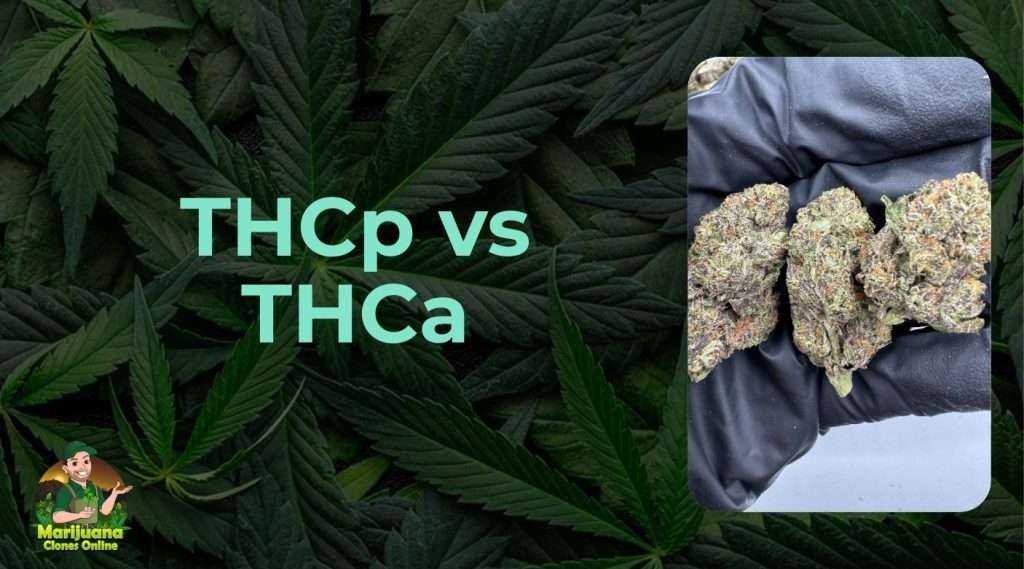
THCp is an extremely potent psychoactive compound, up to 30x stronger than THC, while THCa is non-psychoactive and only becomes active when heated. Both offer unique benefits, legal questions, and effects worth exploring.
Similar to the confusion surrounding THCa vs Delta 9, THCp vs THCa shows there are similarities but more differences than the former.
But what do they actually do, and which one is right for your needs? Read on to find out the best option for you in this guide..
What Are THCp and THCa?
THCp and THCa are two cannabinoids gaining attention for very different reasons. THCp is known for its extreme potency and intoxicating effects, while THCa is praised for its therapeutic potential without producing a high.
Both are tied to THC, but their roles in the plant and the body couldn’t be more distinct. If you’re trying to decide between the two, it starts with knowing what they are and how they work.
THCp is rare, psychoactive, and lab-derived
THCp stands for Tetrahydrocannabiphorol, a cannabinoid found naturally in trace amounts in cannabis. Its potency comes from a seven-carbon alkyl side chain, which allows it to bind to CB1 receptors in the brain with far greater intensity than Delta-9 THC.
That unique structure is what gives it a reputation for being “30x stronger,” though that label is often misunderstood. THCp products are typically synthesized from hemp-derived CBD through a process called terpenylation.
In my experience, THCp is no joke. Even seasoned smokers have been caught off guard by how deep and fast it hits.
THCa is non-psychoactive and naturally occurring
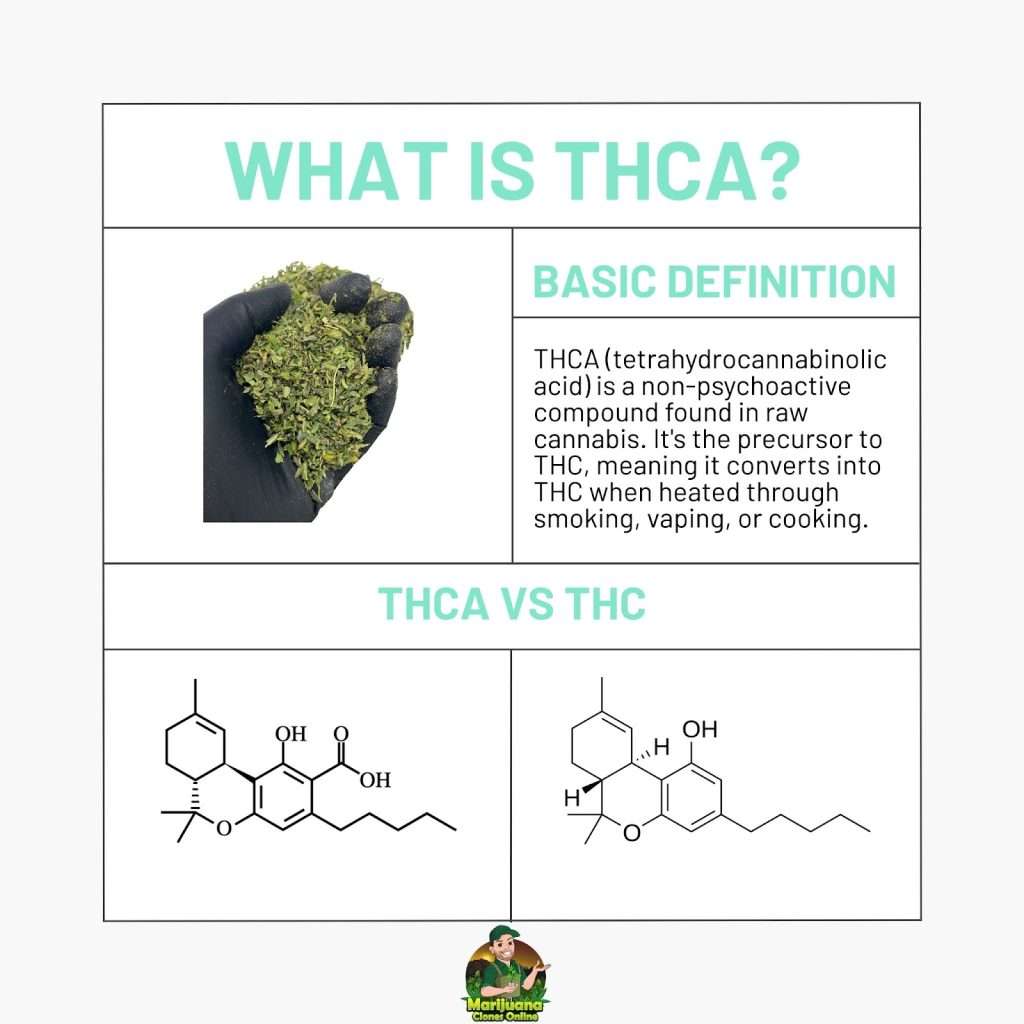
It stands for Tetrahydrocannabinolic Acid, which is the raw form of THC found in freshly harvested cannabis. It does not produce a high unless it undergoes decarboxylation, which happens when it’s exposed to heat. In its raw state, THCa is non-intoxicating but still offers valuable therapeutic benefits.
Because THCa is abundant in live or cured flower, it’s much more accessible in natural form than THCp.
We go the extra mile to ensure our THCa flower arrives as THCa, not THC, by packing it in ice-lined containers with vacuum seals to prevent unwanted decarboxylation during transit. That way, you receive true compliance and consistent relief.

THCp vs THCa: What’s the Difference?
The real difference lies in how each compound interacts with your system, and what that means for your experience.
Potency & Psychoactive Effects
THCp produces immediate effects without requiring heat or transformation. It comes on fast and strong, often catching users off guard if they underestimate its potency.
THCa, by contrast, offers a smoother onset after decarboxylation and can remain completely non-intoxicating when consumed raw. These differences make THCp better suited for intense recreational use, while THCa remains ideal for medical or daytime applications.
Medical & Recreational Use Cases
THCp is often chosen by those seeking deep physical relief or an intense recreational high. Its powerful psychoactivity can be helpful for people dealing with chronic pain, severe insomnia, or appetite loss. Due to its potency, it is not typically recommended for beginners or casual users.
THCp may be useful for:
- Chronic or treatment-resistant pain
- Severe sleep disorders or nighttime use
- High-tolerance users seeking a stronger alternative to Delta-9 THC
THCa appeals to a different type of consumer. Because it does not produce a high until heated, it is ideal for those who want the therapeutic benefits of cannabis without psychoactive effects.
In its raw form, it can be used during the day, in clinical settings, or as a nutritional supplement. Even when decarboxylated, THCa still offers a more measured and predictable experience compared to THCp.
THCa may be useful for:
- Inflammation, arthritis, and muscle recovery
- Nausea, neurodegenerative conditions, and seizure support
- Individuals avoiding intoxication or needing to stay functional during the day
Legality: Is THCp or THCa Legal?
While both cannabinoids are technically legal under federal hemp laws, real-world legality often hinges on how each product is produced, labeled, and interpreted by individual state agencies.
Factors like source material, chemical stability, and potential psychoactivity all play a role in determining what is allowed and what gets flagged.
Here is a summary:
- Source of Origin. Both cannabinoids must be derived from federally legal hemp, not marijuana.
- Delta-9 THC Content. Final products must contain less than 0.3% Delta-9 THC by dry weight to comply with federal law.
- Decarboxylation Potential. Some states account for THCa’s ability to convert into THC.
- Synthetic Classification. THCp is often synthesized from CBD, and some states restrict or ban synthetic or novel cannabinoids regardless of Delta-9 levels.
- Labeling and Intended Use. Marketing language and intended use, such as smoking or ingestion, can influence how regulators classify each product.
- State-Specific Laws. Some states have stricter “total THC” rules or have banned hemp-derived cannabinoids entirely, regardless of federal compliance.
Consumption Methods & Product Types
THCp and THCa are available in very different formats due to how they behave and how they’re produced. THCp must be synthesized and infused into products because it appears in cannabis only in tiny amounts.
THCa, by contrast, occurs naturally in raw flower and can be used in a wider variety of ways depending on whether the goal is therapeutic or recreational.
So, knowing how each is consumed helps determine which one aligns with your needs and preferences.
THCp Product Formats
- Distillate Vapes are one of the most common ways to consume THCp, offering fast onset and strong effects.
- Edibles, like gummies infused with THCp distillate allow for long-lasting, body-centered effects but require cautious dosing.
- Tinctures. These oil-based formulas provide controlled sublingual absorption.
- Infused Flower. THCp distillate can be sprayed onto CBG or CBD-rich hemp flower, since natural THCp levels are too low to harvest directly.
THCa Product Formats
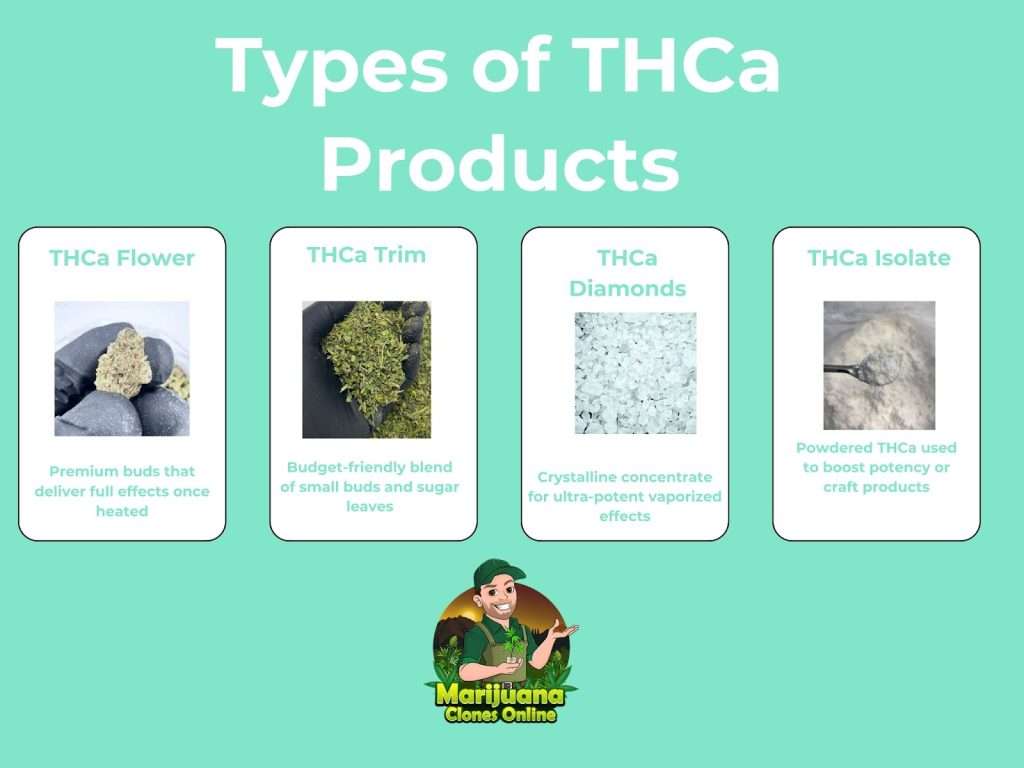
- Raw Flower. This THCa-rich cannabis can be smoked, vaped, or used raw for non-psychoactive benefits.
- Diamonds and Isolate contain highly purified THCa that can be dabbed or added to other products.
- Live Rosin and Hash are solventless concentrates that retain THCa in its natural form.
Side Effects & Risks
THCp and THCa carry different risk profiles depending on how they are used, how they are processed, and the user’s sensitivity. THCa in its raw form presents minimal risks, while THCp, due to its extreme potency and synthetic origins, requires far more caution.
Each compound interacts with the body in a specific way, and that knowledge helps prevent negative outcomes and improves the overall experience.
Side Effects of THCp
- Anxiety or paranoia, especially in low-tolerance users
- Sedation or couch-lock at moderate to high doses
- Dizziness, dry mouth, and delayed motor skills
- Overstimulation when paired with other cannabinoids or stimulants
Side Effects of THCa
THCa does not produce intoxicating effects when consumed in raw form, making it well tolerated by most users. Once heated, it converts into THC and may cause familiar side effects like dry mouth, red eyes, or increased appetite.
Some sensitive individuals may experience mild anxiety or grogginess after decarboxylation. The risks of THCa are linked more to how it is consumed than to the compound itself.
Drug Testing Risks
Both THCp and THCa present a risk for individuals who undergo routine drug testing. Even though they originate from hemp and are legal in many states, most standard tests are not designed to identify the source or the form of THC.
These tests only detect the metabolites that appear in the body after consumption, and both cannabinoids produce results that can lead to a failed screen.
So, Which Cannabinoid Is Right for You?
THCp and THCa offer very different experiences, and the best choice depends on your goals, tolerance, and comfort with psychoactive effects. THCp delivers intense potency and rapid onset, which suits experienced users seeking something far stronger than Delta-9 THC.
THCa provides flexibility for both medical and recreational use, and its non-intoxicating form supports daily routines without altering mental clarity. Each cannabinoid serves a purpose, but they do not serve the same person in the same way.
Choose THCp for Intensity and Deep Relief
For those chasing deep body relief, heavy sedation, or a new level of psychoactive intensity, THCp stands out. Its strong interaction with CB1 receptors produces a full-spectrum high that may be overwhelming without proper dosing. It works best for users who have built tolerance or need significant relief in short bursts.
Choose THCa for Balance, Versatility, and Control
THCa brings a different kind of value. Raw THCa can be used without triggering any intoxication, which makes it ideal for daytime consumption or long-term therapeutic use. Once heated, it converts into THC and offers a clean, natural high that mirrors what many expect from dispensary-grade cannabis.
For clear-headed relief or compliance-conscious consumers, THCa is often the safer and more versatile choice.
Buy THCa Flower or Start Growing with Premium Clones
Shop potent, federally legal THCa flower shipped straight to your door. Or grow the same top-shelf genetics yourself with high-THC marijuana clones trusted by commercial cultivators nationwide.