
Dry cannabis slowly in a dark, well-ventilated space at 60–70°F and 50–60% RH for 7–14 days. Proper drying preserves potency, aroma, and smoothness while preventing mold and harsh smoke.
So, knowing how to dry cannabis is the make-or-break moment after harvest. Do it right and you’ll unlock rich flavor, potent highs, and smooth smoke. Rush it or mess up the environment, and you could end up with moldy, harsh, or flavorless buds.
Let’s walk you through the entire cannabis drying process to help you get it right. Once you’ve properly dried your bud, you can read our guide on how to cure cannabis here to achieve a buttery smooth smoke from your harvest.
Benefits of Properly Drying Cannabis
Dry buds the right way and your harvest transforms into something truly powerful. Flavor, potency, smoothness, all come alive once the drying stage gets the care it deserves. Skip corners and you’ll taste the mistake. As someone who’s handled thousands of phenohunted cuts, here’s what proper drying delivers every time.
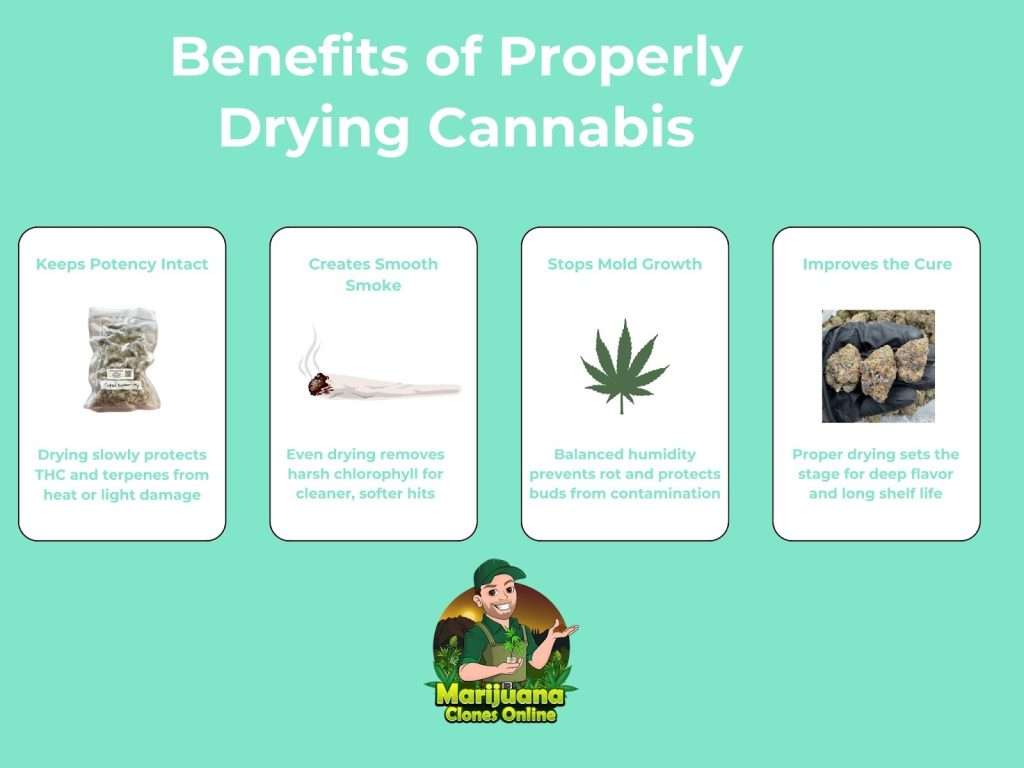
- Preserves Cannabinoids and Terpenes. Without light or heat, buds hold onto the delicate compounds that shape cannabis effects and aroma. THC stays strong. Terpenes stay sharp. That full-spectrum experience starts right here.
- Smooth, Clean Smoke. Harsh hits come from fast drying or trapped chlorophyll. Slow, steady drying breaks that down naturally, giving your lungs a break and your taste buds a proper reward.
- Prevents Mold and Rot. Controlled humidity keeps mold from creeping in. Mold can wipe out a harvest overnight. A good dry space locks in quality and keeps disaster out.
- Sets You Up for a Strong Cure. Get this part right and curing becomes a smooth process that deepens flavor and extends shelf life. Rush it and your jars will never smell or hit the way they should.
- Brings Out True Genetics. When you work with elite breeder stock like we do at Marijuana Clones Online, drying brings that genetic potential to life.

Ideal Cannabis Drying Environment
The environment where buds dry shapes the outcome of the entire harvest. This stage does not allow shortcuts. Quality lives or dies in this space. Every variable must stay within range to protect cannabinoids, preserve aroma, and prevent mold. The right setup brings the best out of each strain.
Temperature and Humidity Set the Tone
Dry rooms perform best between 60 and 70 degrees Fahrenheit. Humidity should hold steady between 50 and 60 percent. Temperatures that climb too high will rush the process and burn off delicate terpenes. Low humidity pulls moisture too fast and leaves behind harsh, brittle buds. Balance is everything here.
Lighting Has No Place in the Dry Room
Exposure to light breaks down THC and terpenes. Complete darkness allows resin to hold its potency and aromatic profile. Any leaks or ambient glow should be blocked. Buds need that calm, controlled space to dry correctly.
Airflow Needs Precision, Not Power
Air should circulate throughout the room without blowing directly on the buds. Fans placed low, facing walls or corners, help move air without stripping moisture too quickly. Still air creates pockets where mold can form. Heavy airflow creates dry, crispy outsides with wet centers.
Drying in a Tent or Garage Can Work Too
Tents allow growers to control humidity, airflow, and light in tight spaces. Garages can be converted using a dehumidifier and small fan system, especially in mild climates. Blackout curtains help stealth growers turn a spare room into a proper dry zone.
Apartment Drying Requires Creativity
A small closet with blackout curtains and passive airflow works for growers without dedicated space. Brown paper bags or hanging racks offer compact drying options. Fan noise and odor control matter here. Essential oils placed outside the door help mask any strong scent. You can also check out our guide on how to get rid of weed smell from your home to cover your tracks better.
Tools That Help Dial It In
Hygrometers track humidity in real time. A humidifier or dehumidifier maintains the right range. Passive intake and active outtake fans keep the room breathing. No guesswork belongs in this stage. Precision matters.
THCa Flower Needs Extra Care
High-THCa strains require cooler temperatures and slower drying to preserve their acid forms. These cuts hold more moisture and can take longer to dry. A gentle, patient approach keeps those effects intact.
How to Dry Cannabis
Drying cannabis calls for patience, precision, and the right environment. This step locks in potency, flavor, and aroma while setting up a smooth cure. Done wrong, even the best genetics fall short. Here’s how to get it right from start to finish.
Set the Right Temperature and Humidity
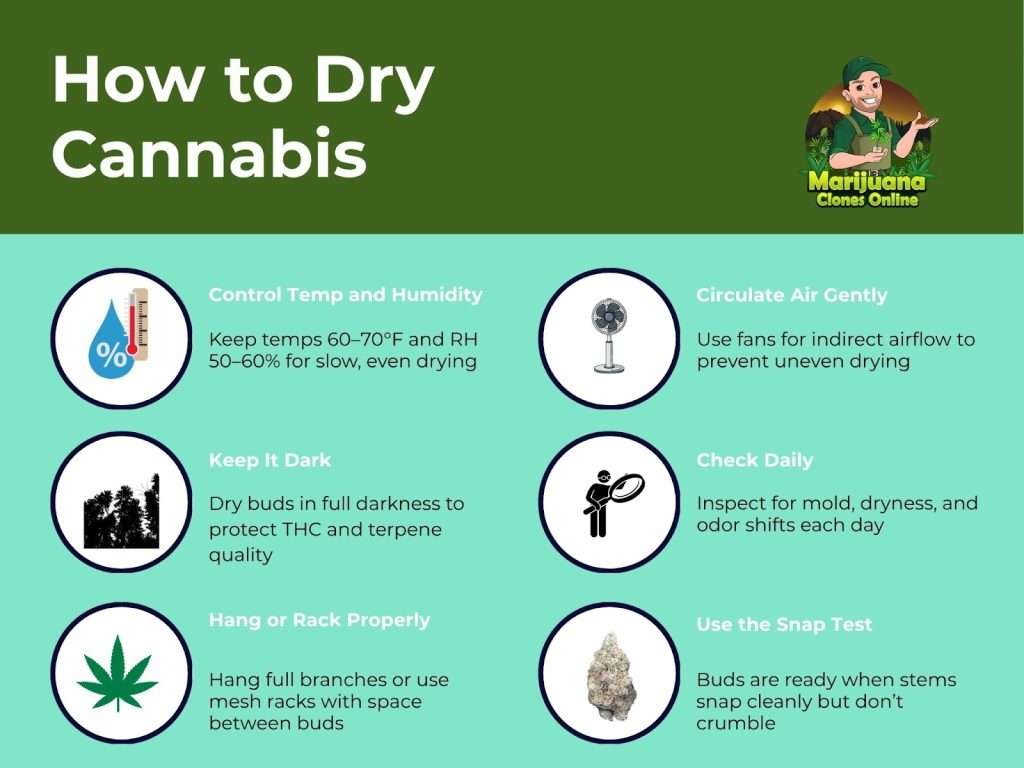
Keep the dry room between 60 and 70 degrees Fahrenheit. Humidity should stay between 50 and 60 percent. These ranges slow the process enough to protect terpenes and cannabinoids. Avoid wide swings. Fast drying causes harsh hits and muted flavor. Slow drying with stable humidity brings out the plant’s full profile.
Use Darkness to Protect Cannabinoids
Light breaks down THC and volatile terpenes. Drying in complete darkness preserves potency and aroma. Cover any light leaks and avoid exposing buds during this stage. The dark environment helps hold everything that makes each strain unique.
Hang or Rack Buds Correctly
Hang full branches or individual stems upside down with space between them for airflow. Dense strains like Permanent Marker benefit from hanging whole to slow the dry. Small buds or wet-trimmed flower can go on mesh drying racks, laid flat without touching. Keep movement gentle to avoid losing trichomes.
Circulate Air Without Blowing on Buds
Airflow should move through the room without hitting buds directly. Place fans low and aim toward walls or corners. This prevents stale air from sitting while protecting buds from drying out unevenly. Passive intake and active exhaust systems work well in tents and closed rooms.
Monitor Daily and Avoid Assumptions
Check buds once a day for signs of mold, smell changes, or overdrying. Hygrometers inside the dry space help track humidity. In smaller setups, open the area briefly to refresh air. This also helps prevent moisture from building up and keeps the environment stable.
Look for the Snap Test
Drying usually takes seven to fourteen days. Buds are ready when smaller stems snap clean instead of bending. The outer layer feels dry but the inside still holds some flexibility. Once this stage is reached, curing can begin without trapping excess moisture.
Should You Trim Before or After Drying?
Trim before drying if fast results, mold prevention, or simplicity matter most. Removing fan and sugar leaves right after harvest speeds up drying by reducing surface moisture. This method works well in humid climates or compact drying spaces where airflow is limited. Wet trimming also makes shaping the buds easier since the leaves are soft and pliable.
However, it exposes more of the bud early, which can lead to uneven drying or flavor loss if conditions shift out of range.
Trim after drying to protect terpenes and improve smoke quality. Leaving the sugar leaves on during the drying phase slows moisture loss and helps preserve aroma and potency. This method suits growers focused on flavor, especially with elite genetics.
Though dry trimming takes longer and the leaves become more brittle, it rewards patience with smoother smoke and a better cure. This approach works well in controlled environments where mold risk stays low and drying conditions can be dialed in precisely.
Common Cannabis Drying Mistakes
Drying cannabis the wrong way ruins more harvests than any other step. Even elite genetics lose value when drying goes off course. The goal is to preserve everything the plant built during flower without rushing, overcorrecting, or cutting corners. Here are the mistakes to avoid:
Drying Too Fast
High heat, low humidity, or direct airflow speeds up drying and locks in chlorophyll. The result is grassy aroma, harsh smoke, and weak flavor. Fast drying also reduces terpene content, leaving buds flat and lifeless.
Drying Too Slow
Excess moisture and poor airflow allow mold to grow from the inside out. Even if humidity stays stable, buds can rot if the air stays still or the space becomes too crowded. Large batches benefit from staggered harvests to manage space and airflow.
Exposing Buds to Light
Leaving lights on or drying near windows degrades THC and aromatics. Even dim LED lights can affect potency over time. Complete darkness must stay consistent to protect the resin.
Pointing Fans Directly at Buds
Direct airflow dries the surface too fast while the inside stays wet. This creates crispy outsides and spongy centers that ruin the cure. Fans should move air through the room, not blast the plants.
Using Plastic Bags
Plastic traps moisture and creates the perfect environment for mold. Paper bags or cardboard boxes breathe better and reduce the risk of wet spots forming inside the buds.
Relying on Humidity Packs During Drying
Humidity packs maintain moisture, not remove it. Using them too early masks under-dried buds and traps water that leads to mold. These are tools for curing, not drying.
Overcorrecting with Dehumidifiers
Aggressive use of dehumidifiers pulls moisture too fast and overdrys the flower. Buds become brittle, aroma fades, and curing becomes impossible. Dehumidifiers should work in short cycles to maintain balance, not force speed.
Skipping Daily Checks
Conditions shift throughout the day. Skipping checks allows small issues to turn into major problems. A dry room needs eyes and adjustments every single day until the job is done.
So, Dry Slow, Stay Potent
Drying is where your grow’s potential is either unlocked, or lost. Take your time, monitor conditions daily, and trust the process. The reward is a smooth, flavorful flower that smacks just right. Dry slow, cure slow, smoke happy.
Ready to Taste the Difference of Real Top-Shelf?

Explore our THCa flower, which is potent, flavorful, and grown from exclusive phenohunted genetics.
Shop now and elevate your next session.