

One weed plant can yield anywhere from 1 ounce to over 1 pound, depending on genetics, growing method (indoor, outdoor, hydro), training techniques, and environment. Indoor grows average 3–5 oz, outdoor plants 8–16 oz+, and hydroponics can push even more with dialed-in systems.
As growers who work directly with elite genetics and pro-level clones, I am here to break down what really drives yield and how you can maximize every plant you grow.
Let’s get into it.
Dry Weight vs. Wet Weight: The Shrinkage Problem

The biggest mistake new growers make is confusing the wet weight of a freshly harvested plant with the amount of smokeable bud they’ll end up with. What looks like a pound on harvest day quickly turns into a few ounces once drying and curing are complete.
I’ve seen the disappointment firsthand. You hang up fat colas thinking you’ve got jars for days, then after a week, you’re wondering where it all went.
Here’s the reality: fresh cannabis is mostly water. As it dries, up to 75 percent of its weight disappears. That’s not a quality issue, but a part of the process. You’re removing moisture to prevent mold and make sure your buds burn clean.
How Much Dry Bud Comes From a Wet Plant?
- A plant that weighs 1 pound (454 grams) wet will usually yield around 4 ounces (113 grams) dry
- A plant that looks like it could fill a turkey pan might only give you enough to fill a couple of jars once it’s cured
This is why I always tell people to plan their harvest goals based on dry weight. Wet numbers don’t mean anything if you can’t smoke or sell water. Focus on the end product, and use consistent drying and curing methods to preserve every gram.
Key Factors That Impact Cannabis Yield
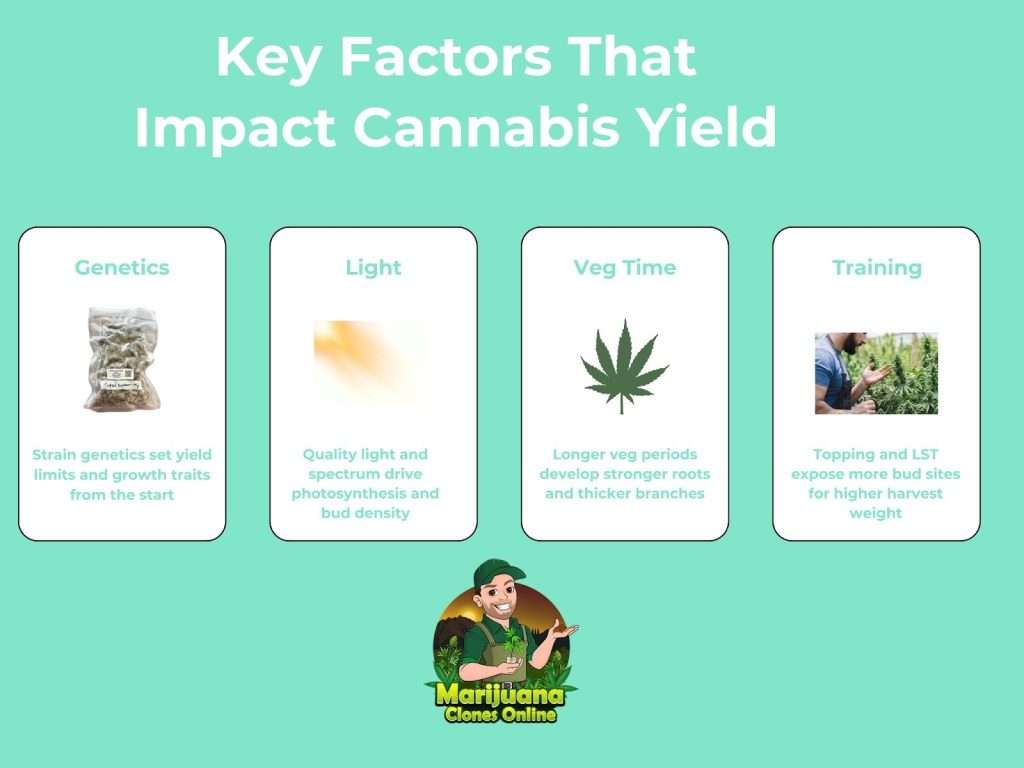
Yield is not luck. It’s the outcome of genetics, environment, technique, and attention to detail. Every grower has asked why one plant pumps out a heavy harvest while another barely fills a jar. These are the variables that separate a decent pull from a standout one.
Genetics Set the Ceiling
Genetics determine what a plant is capable of. Strains like Gorilla Glue #4 or Bruce Banner were bred to deliver bulk. Other strains focus more on flavor or potency but won’t fill out the same way.
Phenohunted clones from Marijuana Clones Online are selected for traits that matter to yield. This includes dense bud structure, stacked internodes, and vigorous growth that doesn’t stall mid-cycle.
Light Output Drives Photosynthesis
Lighting is fuel. The more quality light a plant receives, the more energy it has to turn into growth and resin. Indoor growers often aim for one gram per watt with proper setup. A 600-watt light can yield around 600 grams when paired with the right strain and nutrients. Light spectrum and distance from the canopy also play a major role in bud size and density.
Veg Time Builds Biomass
The longer a plant spends in the vegetative phase, the more it can stretch its root system and build branching. A four-week veg might be enough for small setups, but six to eight weeks allow the plant to develop into a true producer. Short veg time limits yield potential regardless of strain.
Training Techniques Multiply Bud Sites
Low Stress Training (LST), topping, and SCROG all manipulate the plant to expose more bud sites to direct light. These methods flatten the canopy and encourage lateral growth. A trained plant can double or triple its yield compared to one left to grow tall and unstructured.
Growing Environment Shapes the Outcome
Temperature, humidity, air movement, and CO2 all affect yield. Cannabis thrives between 72–78°F with 50–60 percent humidity in flower. Adding CO2 in sealed rooms has been shown to increase yield by up to 30 percent. Poor airflow or unstable temps can introduce stress and reduce growth.
Container Size Controls Root Space
A plant can only grow as big as its roots allow. Five-gallon fabric pots are ideal for indoor use. They give enough space for the roots to stretch without staying overly wet. Outdoors, 10-gallon or larger containers let plants reach their full size. Plants grown in cramped pots often stay small regardless of strain.
Nutrients Must Match Growth Stage
Feeding schedules must align with what the plant needs during veg and flower. Too much nitrogen late in flower hurts bud development. Too little phosphorus early in flower slows resin production. A balanced feeding program with proper pH unlocks maximum uptake and helps avoid deficiencies that kill yield.
Stress Slows Progress
Transplant shock, light burns, temperature swings, and bad pH all delay growth. Even a one-week setback during veg or early flower can impact final harvest weight by 10 to 50 percent. This is why stable environments and proven genetics matter.
Clones vs. Seeds: Which Yields Better?
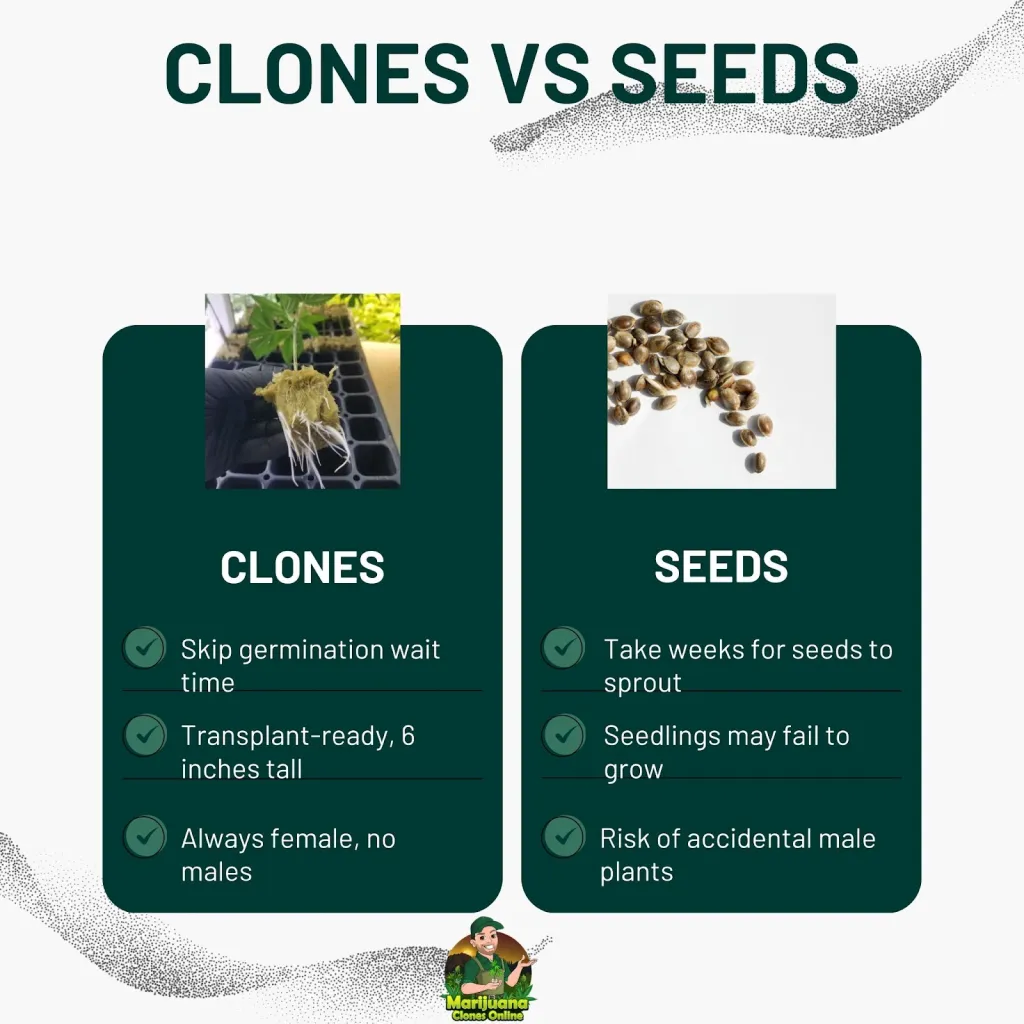
The seed-versus-clone debate always comes down to one word: consistency. Yield isn’t only about what one plant can do at its peak. It’s about what a whole room of plants can do repeatedly, crop after crop. This is where clones separate themselves from seeds.
Seeds Come With Variation
Even when buying top-shelf genetics, seeds produce different phenotypes. One plant may stretch tall and yield heavy, while another from the same pack stays squat and underperforms.
Some might be males, some may herm under stress, and many won’t show their full potential until it’s too late to correct. For growers trying to plan their harvests or scale their setup, this kind of uncertainty reduces reliability.
Feminized Seeds Reduce Risk
Feminized seeds help eliminate male plants, which would otherwise need to be culled. This saves time and space. They still carry phenotype variation, meaning each plant expresses itself differently in growth style, bud structure, and yield potential.
Feminized seeds are useful for breeding programs and growers who enjoy searching for unique traits, but they still require time and testing to stabilize performance.
Clones Deliver Predictable Results
Clones are genetic copies of a proven mother. The yield, structure, flower time, and resin content are already known. When you plant ten clones from the same cut, they grow the same way, feed the same way, and finish together. This makes it easier to optimize everything from lighting to nutrient schedules. Each plant can be pushed to its limit without worrying about surprises halfway through flower.
Common Yield Killers to Avoid
Every grow has the potential to deliver quality flower, but certain mistakes can cut that potential in half, or worse. Yield loss often comes from small issues that snowball over time. These are the most common problems that reduce production and how to stay ahead of them.
Poor Start Conditions
Weak or stressed plants out of the gate rarely recover to full potential. Clones that arrive wilted can bounce back, but only with proper care. Keep humidity stable, avoid overwatering early, and give them time to establish strong roots.
Overcrowding the Canopy
Packing too many plants into a tight space reduces airflow and blocks light from reaching lower bud sites. Air circulation and spacing are essential for bud density and preventing mold.
Untrained Growth
Letting a plant grow tall without any topping, low-stress training, or support structure leads to larfy buds and wasted light. Even one topping cut can double or triple bud sites when done early in veg.
Nutrient Imbalance or pH Drift
Feeding too much or too little at the wrong time hurts both growth and flower development. pH issues silently destroy nutrient uptake. Several growers have seen stunted plants from using untreated tap water with no pH correction.
Inconsistent Lighting
Poor light placement or shifts in schedule confuse the plant and slow growth. Keeping the right distance and intensity is critical. Bud size often suffers when lights are too far away or unevenly distributed.
Environmental Stress
Sudden changes in temperature or humidity can stall plant development. Transplant shock, low nighttime temps, or dry air during flower all cut into the final yield.
Delayed Harvest
Waiting too long can cause cannabinoid degradation. Harvesting too early stops buds from filling out. Watching trichome color helps dial in the right window.
Starting With Unstable Genetics
Plants with weak structure, poor node spacing, or unpredictable growth traits create more work and less flower. Starting with trusted clones from a professional source like Marijuana Clones Online prevents this problem altogether.
Ready to Maximize Your Next Harvest?

Get a head start with pest-free, phenohunted clones from Marijuana Clones Online. Trusted by commercial farms and home growers.