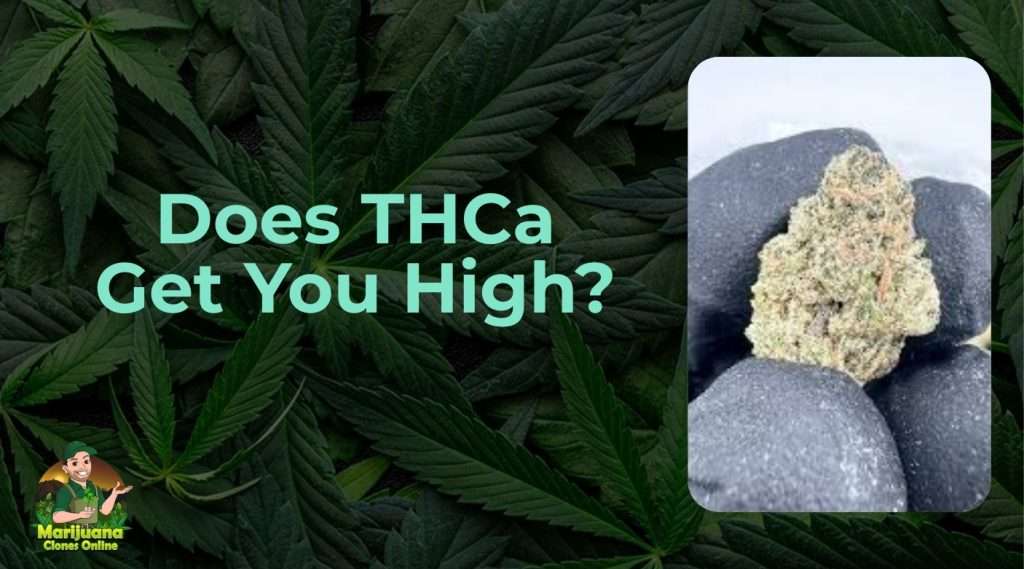
No, THCa does not get you high, unless it’s heated by smoking or decarbing, just like recreational cannabis. On its own, THCa is non-psychoactive, but when smoked, vaped, or cooked, it converts to Delta-9 THC, the compound that does get you high. This makes THCa flower legal yet potent when used in a certain way.
So if THCa doesn’t get you high on its own… why are people saying it hits like real weed? That’s the question we’re answering in this guide.
Let’s get into it.
What Is THCa?
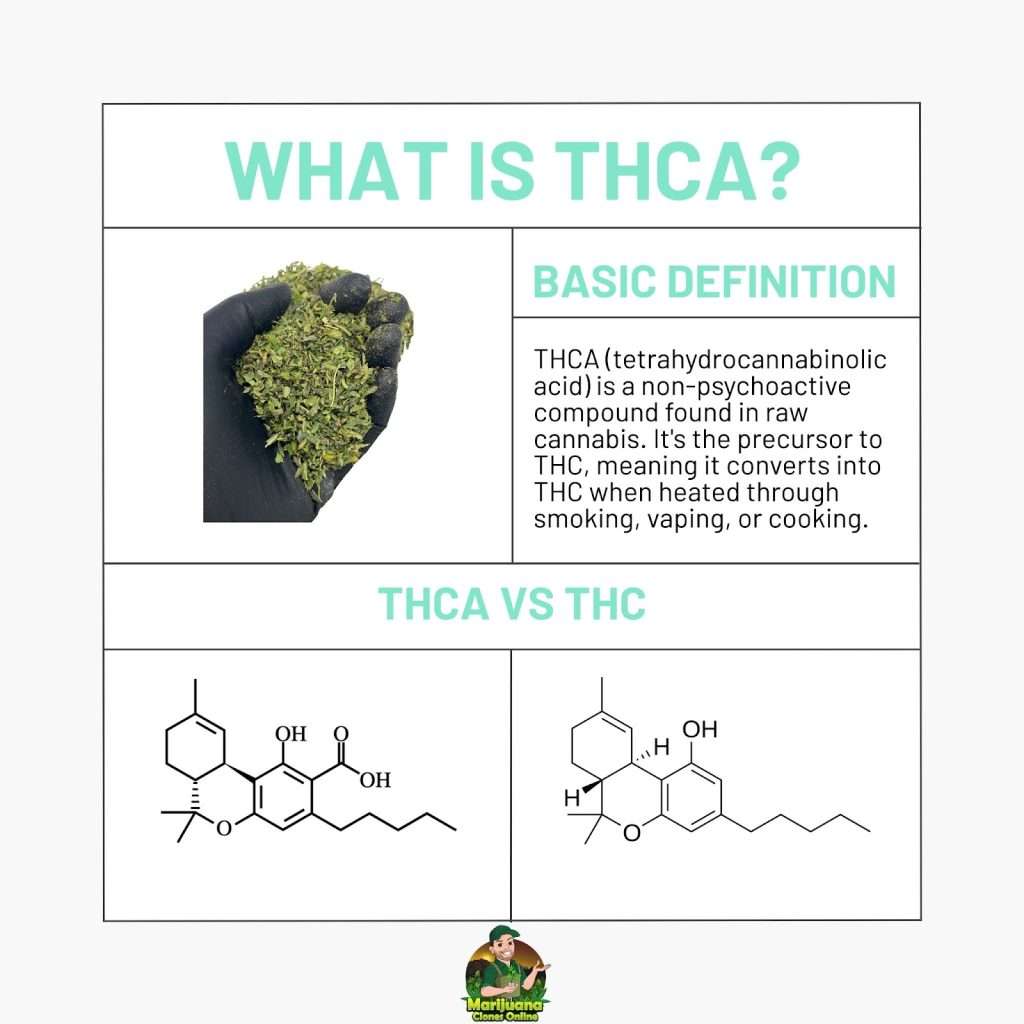
THCa stands for tetrahydrocannabinolic acid. It is the raw, acidic form of THC that exists in fresh, unheated cannabis. Before any flame, oven, or vaporizer touches the plant, THCa is what’s present in those sticky trichomes.
Unlike Delta-9 THC, THCa does not produce intoxicating effects in its natural state. It does not activate the cannabinoid receptors in the brain that cause a high. This is why eating raw cannabis will not make you feel the euphoric effects people often associate with marijuana use.
Legally, THCa has gained popularity because of a specific detail in the 2018 Farm Bill. Under that federal law, hemp is defined as cannabis containing less than 0.3 percent Delta-9 THC by dry weight.
THCa is not mentioned in that definition. This legal technicality allows high-THCa flower to be sold and shipped across many states, even though it can become fully psychoactive once heated.
How THCa Works
THCa begins in an inactive form. Its structure includes an extra carboxyl group that prevents it from binding to the brain’s CB1 receptors. That changes once heat is applied.
Heat removes that carboxyl group in a reaction known as decarboxylation. This transforms THCa into Delta-9 THC, which then binds to those receptors and produces the psychoactive effects cannabis is known for. Smoking, vaping, and cooking all reach the temperature required to trigger this shift.
Without heat, THCa passes through the body without causing a high. Once activated, it behaves the same way as THC found in dispensary flower. This is why THCa flower, though compliant before use, can deliver the same experience as traditional cannabis after combustion. The effects depend entirely on that chemical change.

Types of THCa Products
THCa is available in a range of product types. Each one is built for a specific kind of use. Some are made for smoking. Others are kept raw for non-intoxicating effects. The product type controls how THCa fits into everyday use or growing operations.
THCa Flower
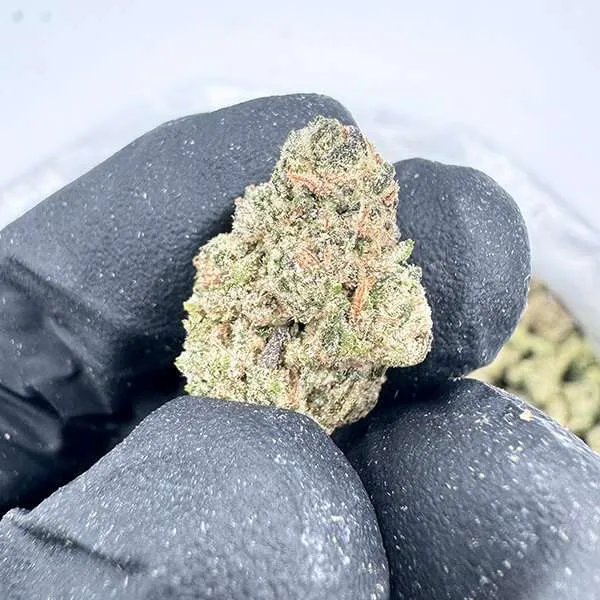
This is trimmed cannabis that tests below the federal Delta-9 THC limit. It can be smoked or vaped. Many buyers choose THCa flower because it looks, smells, and performs like dispensary-grade weed. It remains the most common and accessible option. Our flower is never sprayed, unlike sprayed flower like Delta 8 flower.
THCa Pre-Rolls
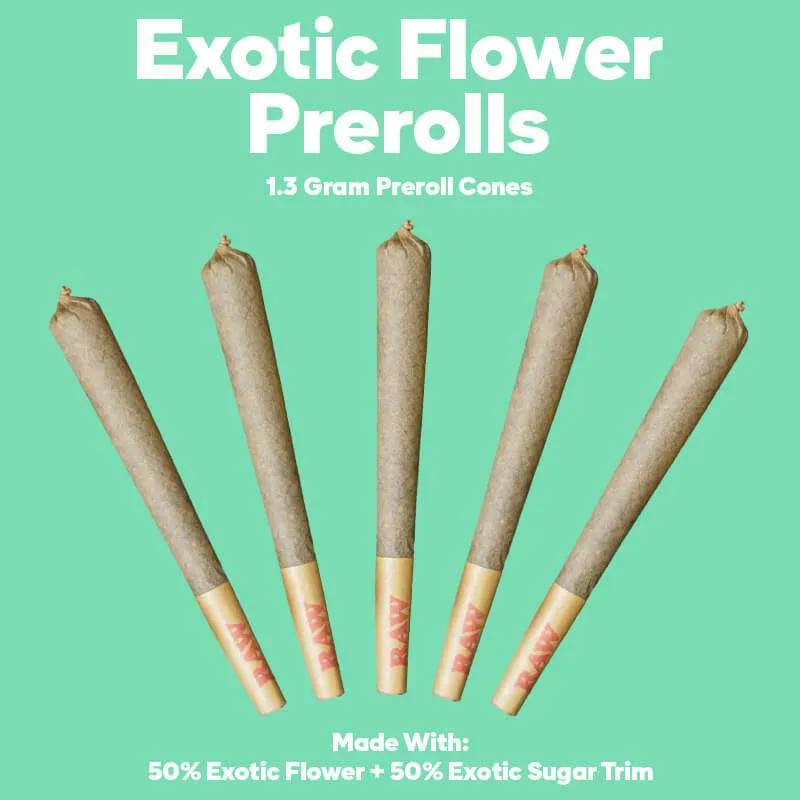
These are ready-to-smoke joints filled with THCa flower. They offer the same effects as loose flower but come pre-packed for convenience. Most are strain-specific and labeled with total THCa percentages.
THCa Isolate
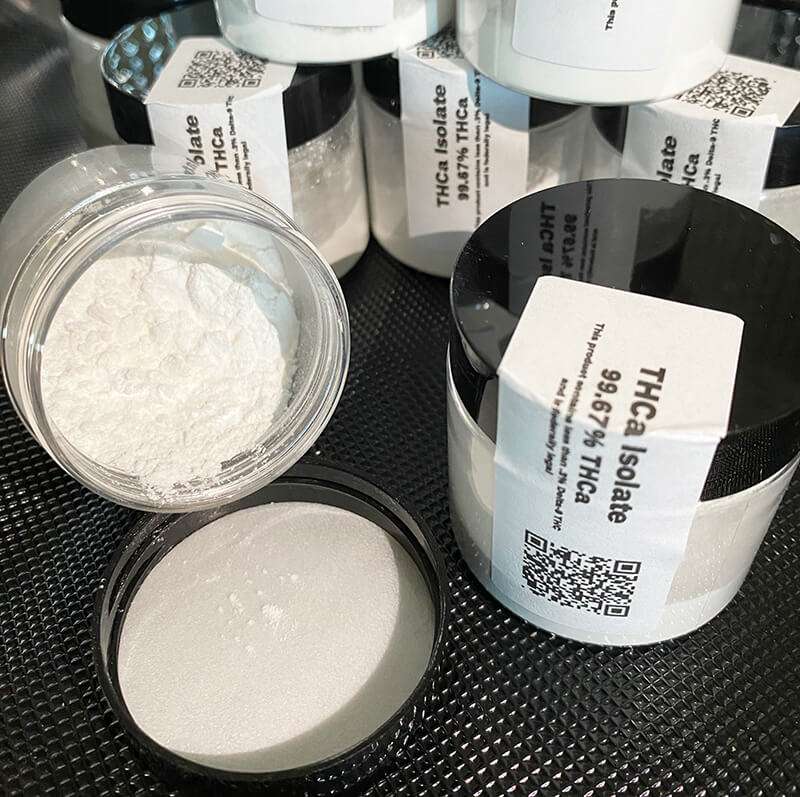
THCa isolate is a fine, powdery concentrate that’s refined to nearly 100% purity. Free from terpenes, fats, or waxes, isolate is prized for precision dosing and versatile use. It can be dabbed, added to joints, infused into edibles, or blended into custom extracts.
THCa Diamonds
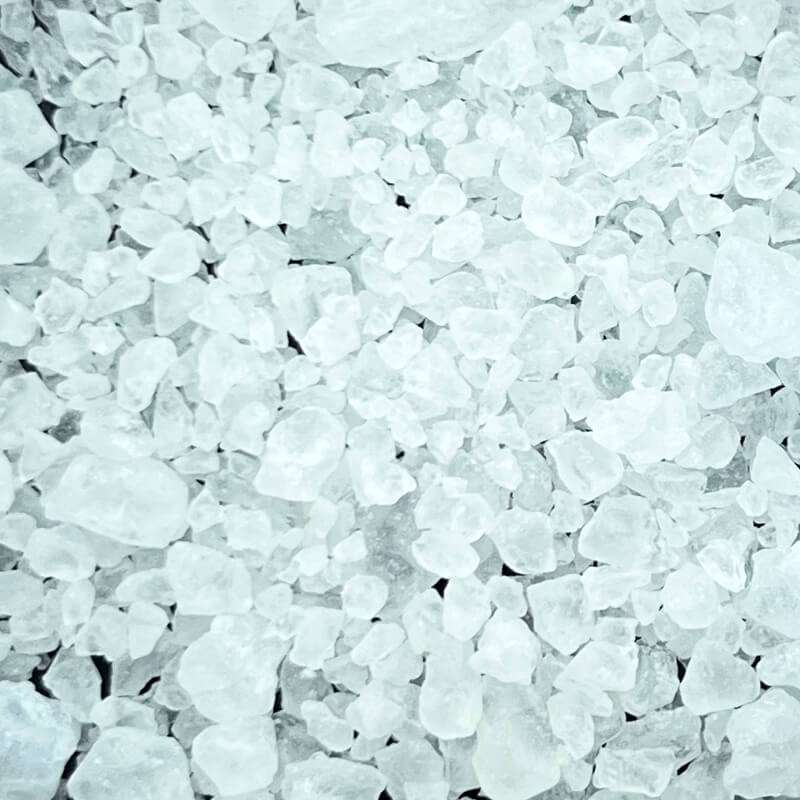
THCa diamonds are crystalline concentrates that deliver some of the purest potency on the market. Known for their glass-like structure, diamonds often test above 95% THCa, making them a top choice for dabbers and extract enthusiasts. When heated, they transform into powerful Delta-9 THC, offering fast, heavy-hitting effects with unmatched purity and flavor when paired with terpene sauces.
THCa Vapes
These are cartridges or disposables filled with THCa-rich oil or a THCa blend. They are made for consumers who prefer not to smoke flower. Some use distillate. Others use full-spectrum extracts that include terpenes.
THCa Concentrates
This category includes products like diamonds, isolate, wax, or crumble that are made through extraction. They offer high potency in small doses. Most are used with dab rigs or high-heat vaporizers.
THCa Edibles
These include gummies, chocolates, or baked goods that list THCa on the label. Some are infused with raw THCa, while others use material that has already been decarboxylated. The effect depends on the production method.
How THCa Flower Is Grown
THCa flower starts with a clone. In short, to grow a flower that stays compliant before harvest and converts to potent effects after use, the genetic foundation needs to be locked in from day one.
A clone is a cutting taken from a mother plant with known traits. That plant has already shown strong THCa expression, high trichome production, and clean compliance under 0.3% Delta-9 THC. Clones carry those traits forward without the guesswork or variability of seeds.
We, at Marijuana Clones Online, ensure every cut we ship comes from stabilized, phenohunted lines. These are not off-the-shelf genetics. They’re built to finish strong, test clean, and deliver flower with the kind of THCa content buyers are looking for. That includes structure, yield, and cannabinoid output.
THCa vs THC: Key Differences in Effects, Legality, and Use
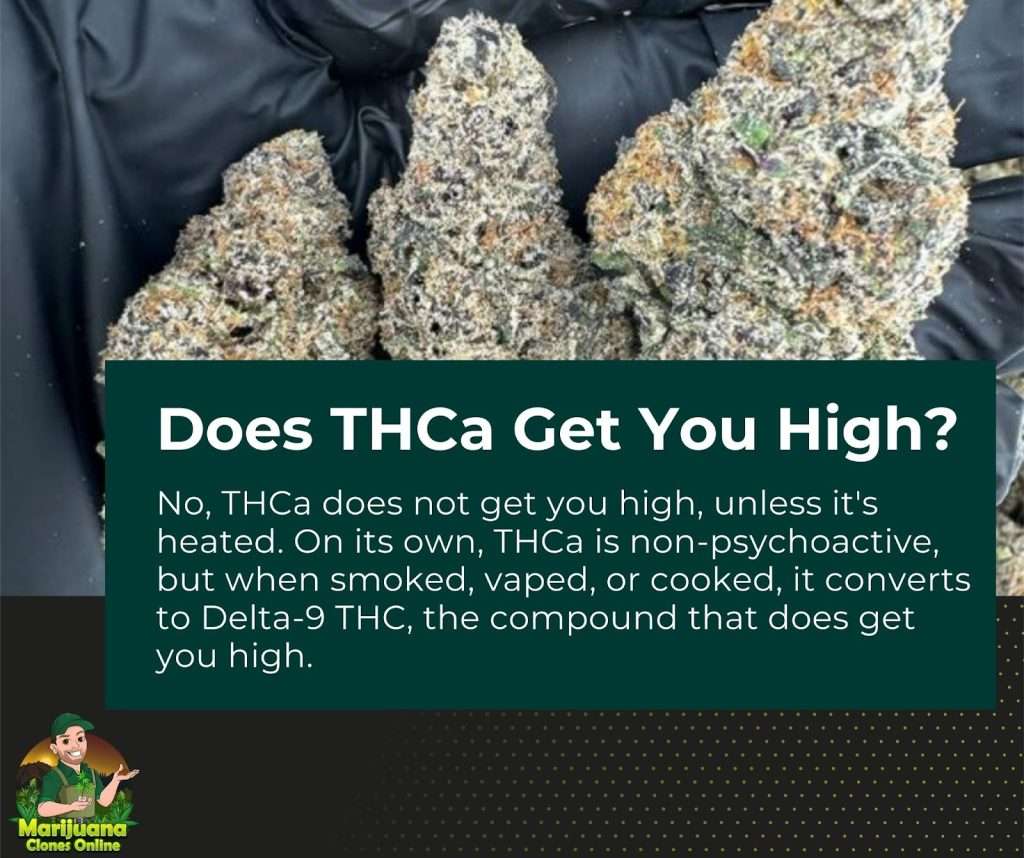
THCa and THC are closely connected but do not behave the same way in their raw forms. One is non-psychoactive until activated. The other produces immediate effects. This distinction shapes how each compound is used, how it is classified, and how it shows up on lab results.
Effects
THCa does not cause a high unless it has been heated. It stays inactive in raw flower, tinctures, and capsules. THC, on the other hand, interacts directly with cannabinoid receptors in the brain and produces a psychoactive response. Once THCa is exposed to heat, it becomes THC and delivers the same effects. When choosing between THC vs Delta 9, it’s important to understand that they are the same flower and have the exact same effect, there is literally no difference in the experience.
Legality
THCa is legal under the 2018 Farm Bill as long as the product contains less than 0.3 percent Delta-9 THC by dry weight before decarboxylation. That technicality allows high-THCa flower to be sold legally across many states. THC is regulated at the state level.
Products that contain activated THC fall under cannabis laws, which often limit possession, purchase, and use.
Use
THCa is often used in flower form for smoking and vaping. It is also found in tinctures and capsules made for non-intoxicating purposes. THC is used when a psychoactive effect is the goal. That includes recreational use, certain medical applications, and full-spectrum edibles.
Once heated, THCa can fill the same role as THC, making it popular in places where cannabis is restricted.
What to Know Before Trying THCa
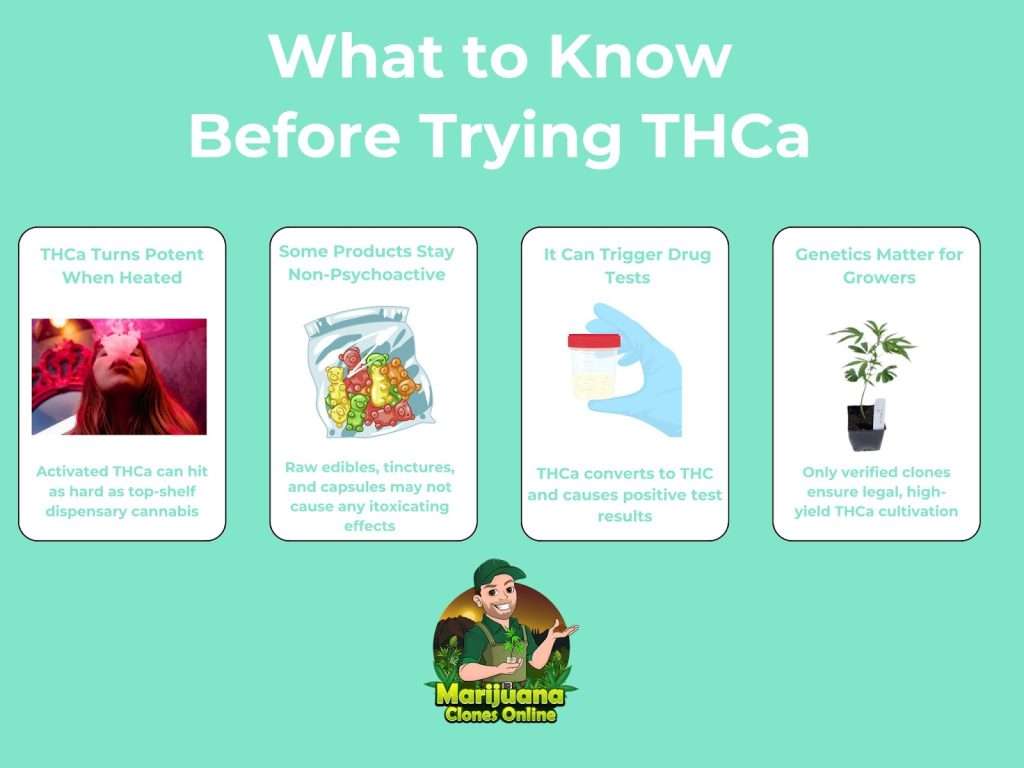
Let’s be clear. Choosing between THCa and THC depends on how the product will be used, how strong the effects should be, and what limits exist based on location or lifestyle. These cannabinoids are connected, but the experience can vary based on how they are consumed and what form they take.
THCa Can Deliver Strong Effects Once Heated
THCa may sound mild on the label, but once it’s activated, the effects can be intense. High-THCa flower often contains enough potential to match or outperform dispensary cannabis. Those trying it for the first time should start slow and use care when selecting strains or products.
Not Every THCa Product Is Psychoactive
Some tinctures, capsules, and edibles are designed to remain raw. These products are marketed for wellness purposes and do not cause a high. Consumers looking for that type of experience should read product labels carefully and confirm whether decarboxylation has occurred during processing.
Product Quality Varies Widely
Legal THCa products are not always regulated at the same level as cannabis sold in licensed dispensaries. Testing, potency, and freshness can vary between brands. Some flower may be dry, harsh, or harvested early to pass compliance checks. Lab results showing total THC after heating can help give a more accurate picture of strength.
Drug Tests Can Still Detect It
Even though THCa starts out non-intoxicating, once it becomes THC, it produces the same metabolites in the body. Regular use of THCa flower or vapes can result in a failed drug test. Anyone in a zero-tolerance environment should avoid products that will be heated and inhaled.
THCa and THC Are Not Interchangeable in Every Situation
Raw THCa can support wellness without the high. Activated THC is used when psychoactive effects are wanted. Each compound plays a role, but they do not offer the same experience unless decarboxylation is part of the process.
Clones Matter for Growers
For anyone planning to cultivate THCa-rich flower, the genetics make the difference. That’s why we provide stabilized clones that are bred to stay compliant on paper but deliver results once harvested and cured. Starting with a verified THCa phenotype allows for predictable results and legal peace of mind.
So, Does THCa Get You High?
Yes, but only if heated. THCa in its raw form won’t get you high, but smoke it, vape it, or bake it and you’re experiencing full-strength THC. It’s a legal workaround with real potency, so treat it with the same respect you would traditional cannabis.
Tired of Mid-Grade THCa That Doesn’t Hit?
Upgrade your stash with lab-tested THCa flower that actually delivers.
We, at Marijuana Clones Online, don’t do mids, mystery strains, or sprayed shake. Our flower is cultivated for potency, purity, and real effects.