

Early detection of male plants is one of the most critical skills in cannabis cultivation, especially when the goal is to grow high-quality, seedless flower.
Male plants don’t produce the buds most growers are after, and worse, they release pollen that can sabotage nearby females, leading to reduced potency and disappointing yields. The key to protecting your crop lies in spotting the subtle signs of male sex traits during the vegetative stage, weeks before full flowering begins.
This guide walks you through everything you need to look for, including tips, grower-tested tricks, and the most common mistakes to avoid when trying to tell males from females early in the grow.
Let’s dive in.
Why You Need to Identify Male Weed Plants Early
While male plants play a role in cannabis reproduction, they pose serious risks in most cultivation environments focused on maximizing yield and potency.
Here’s why early sexing is a key step in cannabis growing:
- Male plants produce pollen, not buds. Unlike females, males do not generate usable flower. Instead, they form pollen sacs that, once opened, spread pollen through the grow space and trigger seed production in nearby females.
- Accidental pollination ruins female crops. When female plants receive pollen, they shift from growing potent buds to producing seeds. This transformation drastically reduces cannabinoid content, flavor, and overall quality.
- Legal plant limits raise the stakes. Growers limited to a small number of plants cannot afford to waste a spot on a male. Each plant needs to contribute to the final harvest, and an unwanted male drains time, space, and resources.
- Pollen spreads easily and silently through the air and can cling to clothes, tools, or even pets. A single missed male can compromise an entire grow if not removed in time.
- Hermaphrodites add to the risk. Some plants develop both male and female traits, often as a stress response. These hermaphrodites can go unnoticed and pollinate surrounding plants without showing clear warning signs.
- Delays in removal can destroy entire harvests. Pollen sacs can mature and open in less than two weeks. Identifying and removing males as early as possible minimizes the chance of accidental pollination.
Male vs. Female Cannabis Plants: Key Differences
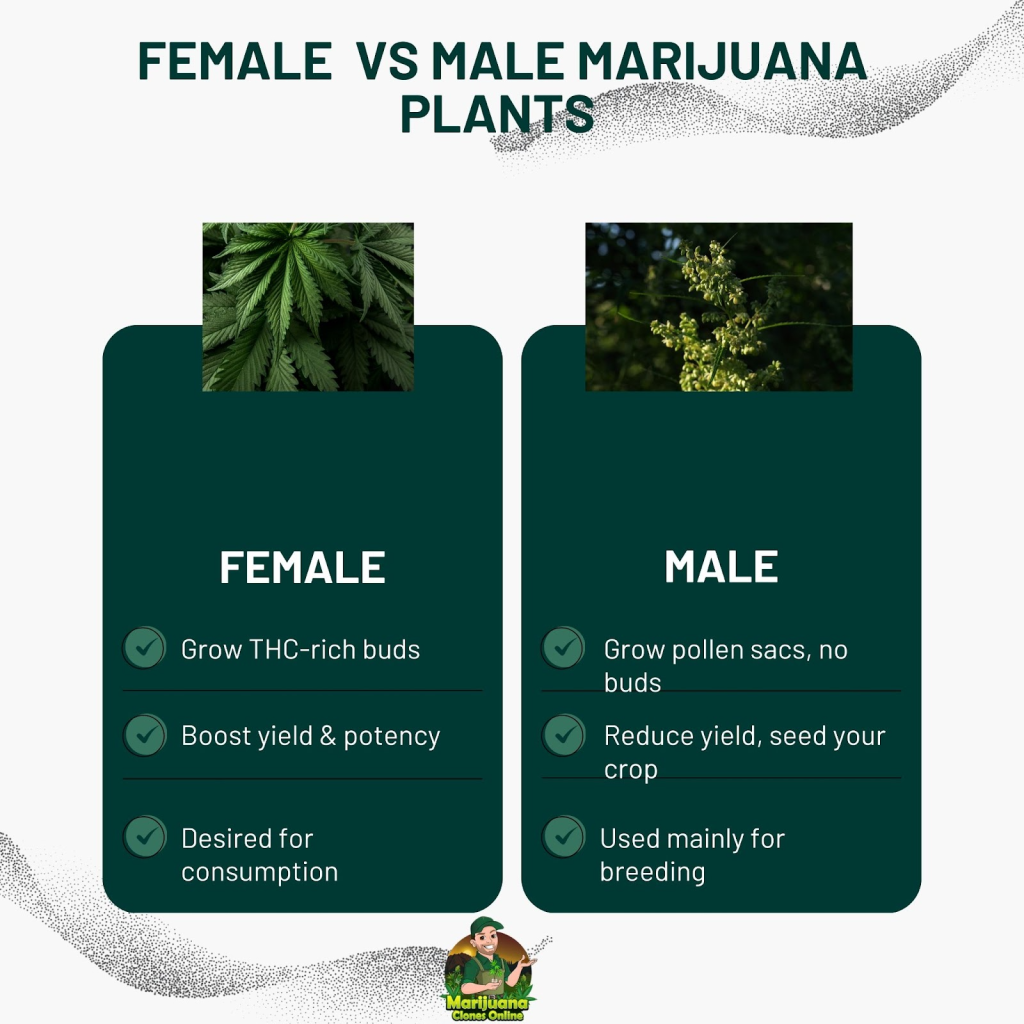
Cannabis plants are dioecious, meaning they grow as either male or female.
Male plants tend to be taller and more spaced out in structure. Their growth pattern often appears lankier, with fewer leaf clusters and more space between nodes. As they mature, small round sacs begin to form where the branches meet the main stem. These sacs develop in clusters and carry the plant’s pollen. Each sac is smooth, firm, and without any visible hairs.
Female plants, on the other hand, are typically bushier and more compact. Instead of round sacs, females produce calyxes that look like tiny tear-shaped pods. From each calyx, white pistils emerge, forming a V shape. These thread-like hairs are one of the most reliable indicators of female sex and are responsible for catching pollen if it’s present.
The appearance of pistils is a clear sign that the plant is female, while the absence of pistils and presence of symmetrical sacs points to a male. Unlike the pistils, male pre-flowers remain hairless and may look similar to new growth at first glance. This is where many new growers go wrong, mistaking early leaf development or stipules for reproductive organs.
Hermaphroditic plants further complicate matters. These plants develop both male and female sex organs and can result from unstable genetics or environmental stress. A plant that starts off showing pistils might later grow a pollen sac, making routine inspection vital throughout the grow cycle.
How To Identify a Male Weed Plant
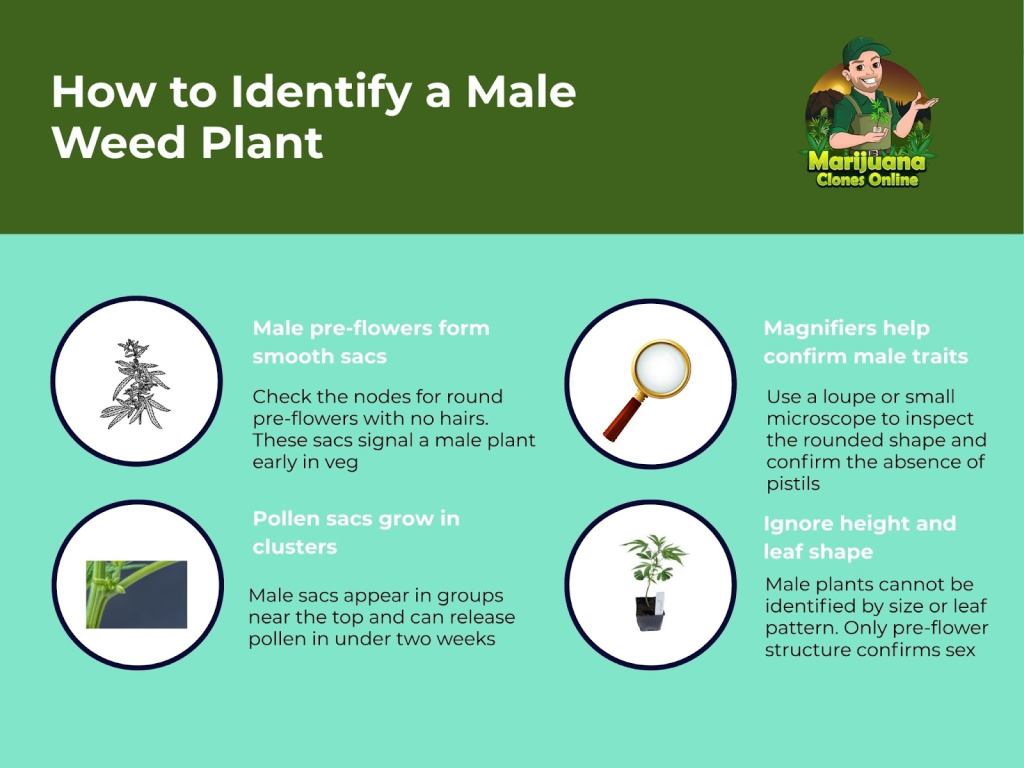
Identifying a male cannabis plant early can make the difference between a successful harvest and a ruined grow. The process begins during the vegetative phase and becomes clearer as the plant approaches flowering. Here’s how to recognize the signs at each stage.
Watch for Pre-Flowers at the Nodes
Pre-flowers begin forming around weeks three to six of vegetative growth. They appear at the nodes, where branches meet the main stem. In males, these pre-flowers take the shape of small, round sacs. Unlike female calyxes, which produce white pistils, male sacs are smooth and do not have any visible hairs.
Recognize the Shape and Clustering of Male Sacs
Male pre-flowers are ball-shaped and may resemble tiny bananas or teardrops. These balls tend to cluster in groups, often higher on the plant than female calyxes. They appear symmetrical and are easy to mistake for new growth, especially in early stages. Many new growers confuse them with stipules or leaf folds, leading to delayed action.
Understand the Timing of Pollen Sac Development
Once visible, male pollen sacs can mature quickly. In some cases, they open and release pollen within two weeks. That’s why growers need to inspect their plants daily once pre-flowers appear. Waiting too long can lead to accidental pollination, even in tents with good airflow or filtration.
Use Magnification Tools for Early Clarity
A jeweler’s loupe or small microscope can make all the difference when examining pre-flowers. These tools allow growers to see fine details like the absence of pistils or the rounded shape of a sac. For expensive grows or legal-count setups, this level of inspection helps avoid irreversible mistakes.
Look Beyond Leaf Shape and Plant Height
Despite persistent myths, leaf shape and plant structure do not reliably indicate sex. A tall plant with narrow leaves is not necessarily male. Only pre-flower examination reveals the truth. Relying on general appearance has misled many growers and caused the loss of entire crops.
Monitor for Unexpected Traits
Some male plants may appear slightly different depending on the strain. Specific cultivars show variation in how and where pre-flowers develop. Growers familiar with their genetics will have an easier time spotting subtle cues, but all should inspect closely during the sexing window.
Inspect During Lights-On Periods
Plant sex traits are easiest to see under grow lights, during the regular light cycle. Shadows and plant movement can obscure small sacs or pistils, so plan inspections for well-lit hours and be thorough. Rotate each plant and examine both top and lower nodes.
Mistakes Growers Make When Sexing Cannabis Plants
Sexing cannabis plants early is a skill that improves with experience, but many growers fall into common traps during their first few grows. These missteps can lead to accidental pollination, wasted time, or a missed harvest. Here’s what to avoid:
- Confusing stipules for sex organs. Stipules are small, leaf-like structures at the base of branches. Many beginners mistake them for pre-flowers, leading to false conclusions about a plant’s sex.
- Trying to sex plants too early. Jumping the gun before week three of vegetative growth often results in guesswork. True pre-flowers haven’t developed yet and misidentification is likely.
- Relying on leaf shape or plant size. Tall plants with narrow leaves are often assumed to be male, but these traits have no direct connection to sex. This myth causes growers to discard perfectly good females.
- Ignoring the importance of magnification. Skipping a jeweler’s loupe or scope can make it nearly impossible to tell the difference between a calyx and a sac during early development.
- Allowing stress to cloud results. Transplant shock, temperature swings, and inconsistent light cycles can lead to hermaphroditic traits. This makes sexing more complicated and raises the risk of hidden pollen sacs.
- Letting “maybe males” sit too long. Hoping a suspicious plant “figures itself out” can lead to pollen sacs opening unnoticed. Some growers leave potential males in the tent until it’s too late.
- Assuming feminized seeds can’t produce males. While uncommon, feminized seeds can still express herm traits under stress. Trusting the label without monitoring is risky.
- Using pre-flower location inconsistently. Some strains produce pre-flowers in non-standard locations. Only checking the top nodes can lead to missing early sacs lower on the plant.
- Thinking hermaphrodites look like males. Herms may start with female traits and develop male sacs later. This delayed expression fools growers who stop inspecting after initial signs.
- Overlooking environmental impact on development. Poor airflow, excess humidity, or low VPD (vapor pressure deficit) can slow pre-flower growth, making it harder to spot male traits in time.
What To Do If You Find a Male Weed Plant

Finding a male cannabis plant in your grow space demands quick, careful action. A single pollen sac can fertilize dozens of nearby females, causing permanent damage to your harvest. Here’s how to handle the situation with confidence and protect the rest of your crop.
Remove the Male Plant Immediately
As soon as male traits are confirmed, the plant should be removed from the grow space. Waiting even one day can lead to accidental pollination. Avoid dragging the plant through the room. Instead, gently bag it at the base and cut it away to limit pollen release.
Inspect Surrounding Plants Closely
After removing the male, carefully examine all nearby plants for signs of contamination or stress. Look for early pistil changes or unexpected sac formation. Hermaphrodites may appear soon after a male is removed, especially if the environment has been unstable.
Disinfect Tools and Hands
Pollen can cling to scissors, gloves, clothing, and even skin. Wash your hands thoroughly and wipe down any tools used during removal. Failing to clean up can transfer pollen to healthy female plants in your next session.
Seal and Dispose of the Plant Safely
Bag and discard the removed male outside your grow area. Do not compost it or leave it where wind or pets can spread residual pollen. Sealed disposal prevents lingering contamination.
Monitor for Late-Stage Hermaphrodites
Even after a male is gone, some female plants may begin showing signs of stress-induced herm traits. Regular inspection during early flowering is critical. Look for “banana” shapes or unusual sac development deep in the buds.
Use This as a Learning Opportunity
If a male made it into your grow, review your identification timeline. Consider if pre-flowers were missed, inspections delayed, or if stress factors played a role. This reflection helps sharpen your skills and avoid future risks.
Don’t Let a Single Male Ruin Your Grow
Every successful cannabis harvest starts with a strong foundation, and identifying plant sex early is one of the most essential steps. Male plants may have their place in breeding programs, but for most growers focused on quality flower, they represent risk, not reward.
The presence of even one male plant can compromise months of care, preparation, and investment by triggering unwanted pollination and reducing your final yield.
Growers who catch male traits early protect their entire crop. They prevent seed-filled buds, maintain cannabinoid levels, and preserve the full flavor and structure of their plants. Missing a single pollen sac can mean starting over. That’s why attention to detail during the vegetative phase pays off later in harvest weight, trichome density, and satisfaction with the final product.
🌱 Tired of Second-Guessing Your Plants?

Start your grow with guaranteed female clones from Marijuana Clones Online. Our phenohunted, pest-free genetics give you a head start, no sexing, no surprises, just premium results.