
Curious why your cannabis butter is not as strong, or as tasty, as you’d hoped?
This guide will help.
You’re probably doing most things right, but even small mistakes during the infusion process can waste your THC, ruin the flavor, or leave you with inconsistent results.
Potent, smooth, and effective cannabis butter comes down to decarboxylation, temperature control, strain selection, and dosing precision. So, each decision affects not just how strong your butter turns out, but how enjoyable it is to use in recipes.
This guide explains everything you need to know, so you can finally make cannabutter that works.
What Is Cannabis Butter?
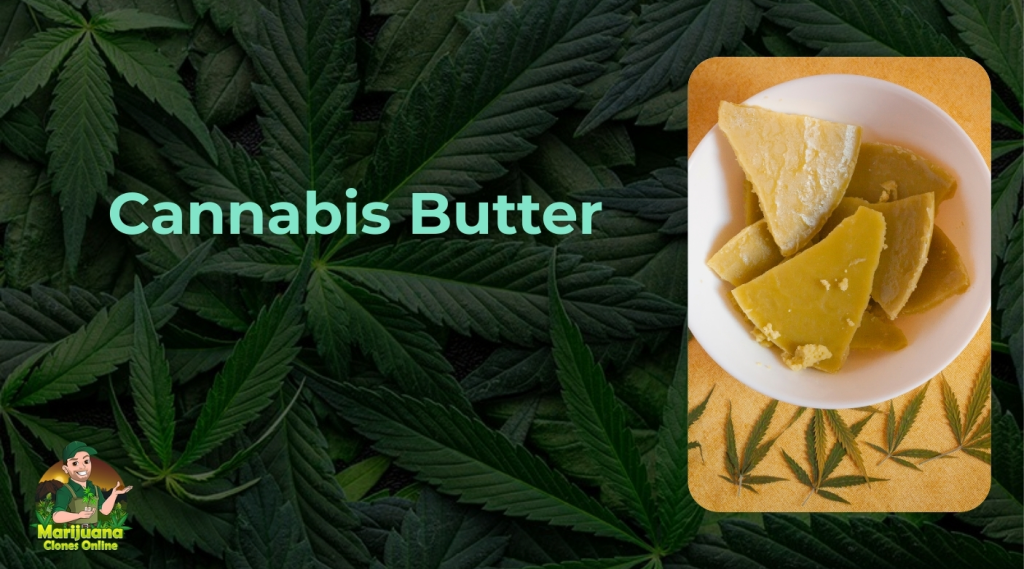
Cannabis butter, often called cannabutter, is a key ingredient used in countless edibles. It is made by infusing the active compounds in cannabis, primarily THC and CBD, into a fat source, most commonly butter.
This infusion allows those cannabinoids to be absorbed into the body through digestion rather than inhalation, offering longer-lasting and often more intense effects.
Cannabutter also opens up a creative world of home cooking. A small amount can transform an everyday dish into something far more therapeutic or enjoyable. Still, not all cannabis butter is the same. The strain used, how it’s prepared, and how it’s stored can all influence the experience.

How Does Cannabis Butter Work in the Body?
Cannabis butter works through digestion. After consuming an edible, your body processes the cannabinoids, especially THC, through the liver. This is where a transformation happens. The liver converts delta-9 THC into 11-hydroxy THC, a compound known for producing more intense and longer-lasting effects than smoking or vaping.
The onset typically takes between 30 minutes to two hours. That delay is what often catches people off guard. Because the effects build slowly, some take more, then experience stronger results than expected.
Once it kicks in, the high from edibles can last anywhere from four to eight hours, depending on dose, metabolism, and tolerance.
What You Need to Make Cannabis Butter
Cannabis butter doesn’t require a lab or complicated equipment. Most of what you need is already in your kitchen.
Ingredients
- Cannabis Flower or Trim
- Unsalted Butter
- Water
Tools
- Oven
- Baking Sheet
- Grinder or Hands
- Slow Cooker, Saucepan, or Double Boiler
- Stirring Spoon
- Thermometer
- Cheesecloth or Fine Mesh Strainer
- Glass Jar or Bowl
- Refrigerator
- Freezer (Optional)
Step-by-Step Guide to Making Cannabis Butter
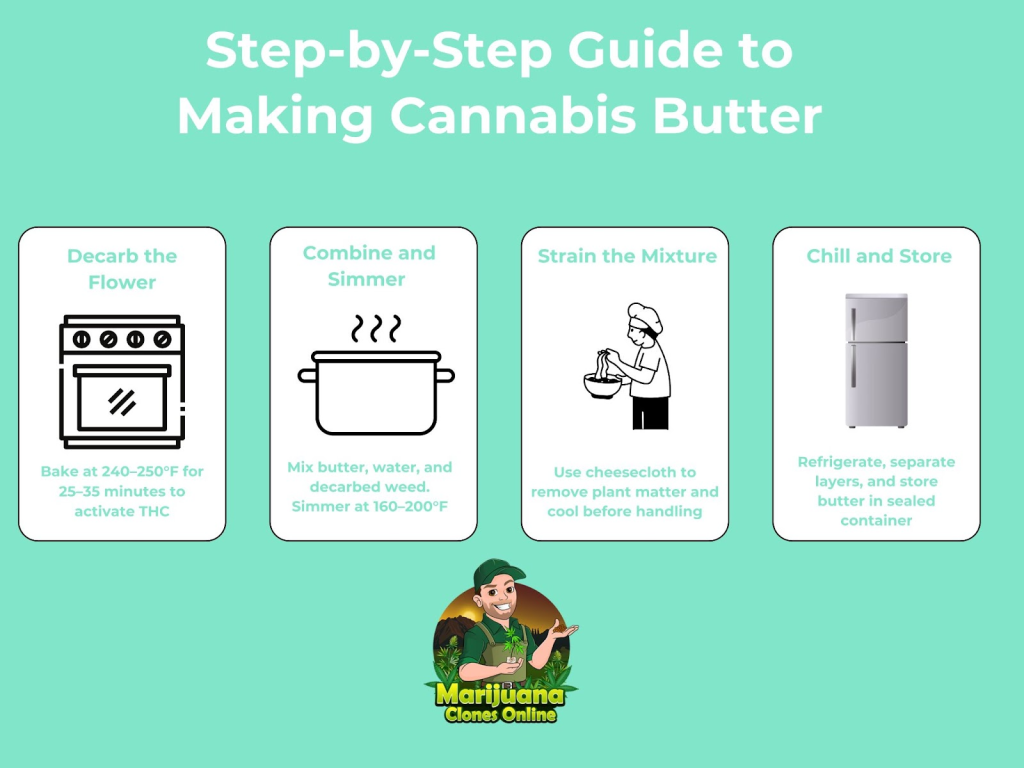
This is where everything comes together. A careful infusion process makes the difference between weak, grassy butter and a smooth, potent base that elevates any recipe. Follow each step closely to avoid burning off cannabinoids or ending up with inconsistent results.
Step 1: Decarboxylate Your Weed
This step activates THC so the butter delivers real effects. Skipping it means wasting your cannabis.
- Preheat the oven to 240–250°F.
- Break cannabis into small, popcorn-sized chunks. Avoid grinding too fine.
- Spread evenly on a parchment-lined baking sheet.
- Bake for 25 to 35 minutes, until the flower turns light brown and aromatic.
Use a thermometer to monitor oven accuracy. Overheating breaks down THC into CBN, which can dull potency and increase sedative effects.
Step 2: Simmer and Infuse
Now that your cannabis is active, it’s time to infuse it into fat. This is where potency builds.
- Combine 1 cup of butter with 1 cup of water in a slow cooker, double boiler, or saucepan.
- Add 7–10 grams of decarboxylated cannabis.
- Simmer gently for 2 to 4 hours, maintaining a temperature between 160°F and 200°F.
- Stir occasionally to keep material moving and prevent scorching.
Water prevents the butter from burning by keeping the temperature stable. Avoid boiling, which signals excess heat. If the surface bubbles hard or smells sharp, reduce the heat immediately. Infusion should be slow and calm.
Some people prefer to infuse overnight using a slow cooker set on low. That works well as long as temperature stays in the safe range.
Step 3: Strain and Store
Once the infusion is complete, remove the plant material and set aside the butter for future use.
- Place cheesecloth or a fine strainer over a jar or bowl.
- Pour the mixture through slowly, allowing it to filter naturally.
- Let cool slightly before handling to avoid burns.
- Chill in the refrigerator until the butter solidifies.
- Remove the top layer of butter and discard the water below.
Squeeze the strainer gently, but don’t overdo it. Excess pressure can push through bitter compounds and small plant particles, which affect flavor. Once cooled and separated, the butter should be a clean, light green color.
Store in an airtight container. It lasts up to two weeks in the fridge and several months in the freezer. Use silicone molds or ice trays to portion out individual servings for easy dosing and longer shelf life.
How Much Cannabis Butter Should You Use?
Dosing cannabis butter is one of the trickiest parts of the process. A recipe might call for a tablespoon, but the potency of that spoonful depends entirely on how strong your butter is.
Without knowing the THC content of your starting material, it’s easy to take too much or feel nothing at all.
Start small. A standard beginner dose is 2.5 to 5 milligrams of THC per serving. Even experienced users benefit from starting low when trying a new batch. Cannabis affects everyone differently, and edibles hit harder and last longer than smoking.
How to Estimate Potency
You can estimate potency with simple math:
- Assume your cannabis has 15% THC.
- One gram of cannabis = 1,000 mg.
- 15% of 1,000 mg = 150 mg of THC per gram.
- If you used 7 grams to make 1 cup of butter, you have roughly 1,050 mg THC in that cup.
- Divide that into 20 servings, and each one contains around 52 mg THC.
This is only a rough estimate. Decarboxylation and infusion aren’t 100% efficient. Most homemade batches fall between 60% and 80% potency retention.
Tips for Better Cannabis Butter Dosing
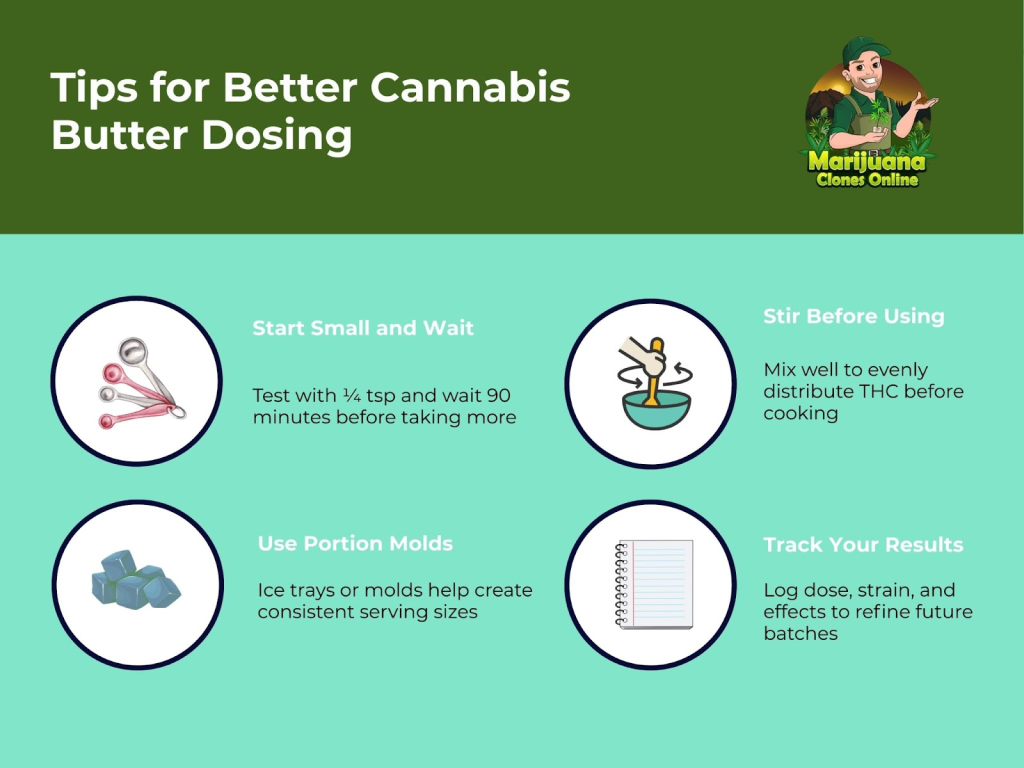
- Test your butter with a quarter-teaspoon in food. Wait at least 90 minutes before eating more.
- Use silicone molds or ice trays to portion out doses evenly.
- Stir butter thoroughly before using in recipes to distribute THC evenly.
- Keep a journal if you’re experimenting with different batches or strains.
Color and smell don’t reveal potency. Many people try to guess strength by the green tint or earthy aroma, but those qualities come from plant material, not THC. Focus instead on starting low and tracking your results.
Overdoing it can lead to hours of discomfort, especially for those new to edibles. The most common mistake is taking more before the first dose kicks in. Wait at least two hours before adding another dose to your system.
If your goal is to stay functional during the day, low-dose butter is the way to go. Start by using half the amount called for in recipes. Save higher concentrations for evening use or relaxation-focused meals.
Recipes Using Cannabis Butter
Cannabis butter opens up a world of edible possibilities far beyond brownies. Once you have a well-made batch, it becomes one of the most versatile infusions in your kitchen. Sweet or savory, low-dose or high-impact, the recipes you choose can shape your experience and effects.
Each dish offers its own way to enjoy THC. Some people prefer small bites throughout the day. Others want something strong that helps them relax at night. It all comes down to how you cook and how much butter you use.
Classic Edibles
- Cannabutter Brownies: Rich, chocolatey, and dependable. Add ¼ to ½ cup of cannabutter to your favorite brownie mix. For even dosing, mix thoroughly and cut into equal pieces.
- Infused Chocolate Chip Cookies: Use cannabutter in place of regular butter in your go-to cookie recipe. Watch oven temperatures. Baking above 340°F may burn off THC.
- Gummies (Made Separately): While gummies use oil or tincture instead of butter, cannabutter can still be blended into some homemade edible gelatin recipes with fat content.
Savory Dishes
- Mashed Potatoes: Melt a spoonful of cannabutter into hot, whipped potatoes for a warm, calming side dish.
- Grilled Cheese: Butter your bread with infused butter before toasting. It’s simple, delicious, and perfect for a controlled dose.
- Popcorn Topping: Drizzle warm cannabutter over air-popped popcorn. Add a sprinkle of garlic powder or parmesan for flavor.
Common Mistakes to Avoid
Even experienced home cooks slip up when making cannabis butter. One wrong move can cost you potency, flavor, or both. These common mistakes are easy to prevent if you know what to watch for.
- Skipping Decarboxylation. Failing to activate THC before infusion results in weak or inactive butter. Always bake your cannabis before simmering.
- Using Too High Heat. Excessive heat degrades THC and alters flavor. Keep the infusion between 160°F and 200°F for best results.
- Grinding Too Finely. Powdered cannabis clogs strainers and releases chlorophyll. Stick to a coarse, crumbly grind for smoother butter.
- Straining Too Aggressively. Pressing or squeezing the plant material too hard pushes out bitter-tasting compounds. Let it drain naturally.
- Wrong Butter-to-Cannabis Ratio. Too much cannabis can overwhelm flavor and make dosing harder. A typical ratio is 1 cup butter to 7–10 grams of flower.
- Neglecting to Stir every 30 minutes during infusion. Stirring keeps temperatures even and prevents burning on the bottom of the pan.
- Judging Potency by Color. Green doesn’t mean strong. Color varies based on grind size and plant content, not THC levels.
- Using Salted Butter. Salted butter makes it harder to control the taste of baked goods or savory dishes. Unsalted butter is the better choice for cooking.
Is Cannabis Butter Legal?
The legality of cannabis butter depends entirely on your location and the type of cannabis you’re using. In some places, making cannabutter at home is completely legal. In others, even possessing infused butter can carry serious penalties. Before you cook, check your local laws.
Is Cannabis Butter Right for You?
Cannabis butter is right for you if you’re looking for a customizable, long-lasting way to consume weed without smoking. It suits anyone who wants to ease pain, improve sleep, boost relaxation, or simply enjoy edibles made at home.
Because you control every step, from strain selection to dosage, it’s one of the most flexible options for both beginners and experienced users.
If you’re new to edibles, cannabis butter gives you an entry point with flexibility. Start with a small amount, learn how it affects your body, and adjust with confidence.
The key is preparation.
A careful approach to decarbing, infusing, and storing your butter leads to better results every time.
Make Stronger Cannabutter with Premium THCa Products

Our THCa flower collection is rich in cannabinoids and ideal for infusing butter that packs a punch. These are hand-selected for purity and potency, so they’re the perfect base for high-strength cannabutter recipes.